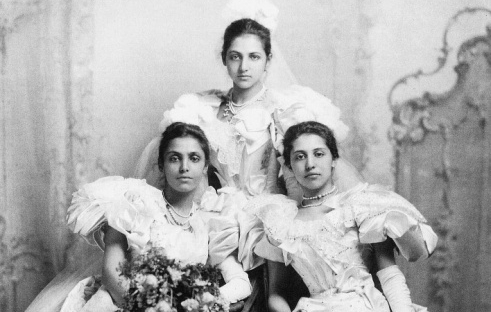
Bamba, Catherine and Sophia were the daughters of the last Maharaja (king/ruler) of the Sikh Empire, Duleep Singh. Their mother was Bamba Müller, the first wife of the ruler, who died in 1887.
Duleep Singh was born in 1838 and became the Maharaja in Punjab when he was five years old. But just five years later, he was forced to surrender his lands to the British East India Company and was exiled from India. His conversion to Christianity and move to England saw him build a close relationship with Queen Victoria. 1
Princess Bamba was the first daughter to be born to Duleep Singh and his wife in 1869. She studied at Somerville College at Oxford, and later at Northwestern University in America. However, with feeling a strong link to her heritage and history, she decided to return to India and hired a female companion who was Marie Antoinette Gottesmann, a Hungarian, Jewish woman. Gottesmann subsequently married and the princess settled in Lahore, Pakistan where she remained until her death in 1947.
During her time in Lahore, she married Dr David Waters Sutherland in 1915. They did not have any children and Sutherland later moved to Scotland where he died in 1939. There is little evidence detailing why he moved. It is possible he simply wished to return to the place where he completed his medical studies. However, leaving his wife behind was a choice likely made by Bamba herself. With wanting to keep the connection to her homeland, she remained in Lahore and refused to move during the partition between India and Pakistan.2
Although there is currently not connection between Bamba and the suffrage movement, her sisters had a significant role in fighting for women’s right to vote.
Princess Catherine Duleep Singh was born in 1871 and studied at Somerville alongside Bamba. She became close to her governess, Fräulein Lina Schäfer, and it is believed that they were later in a romantic relationship. Catherine became a suffragist and joined the fight to allow women the right to vote. She joined a few women’s rights movements and helped to fundraise by opening a ‘Forest of Christmas trees’ in Nottingham.3
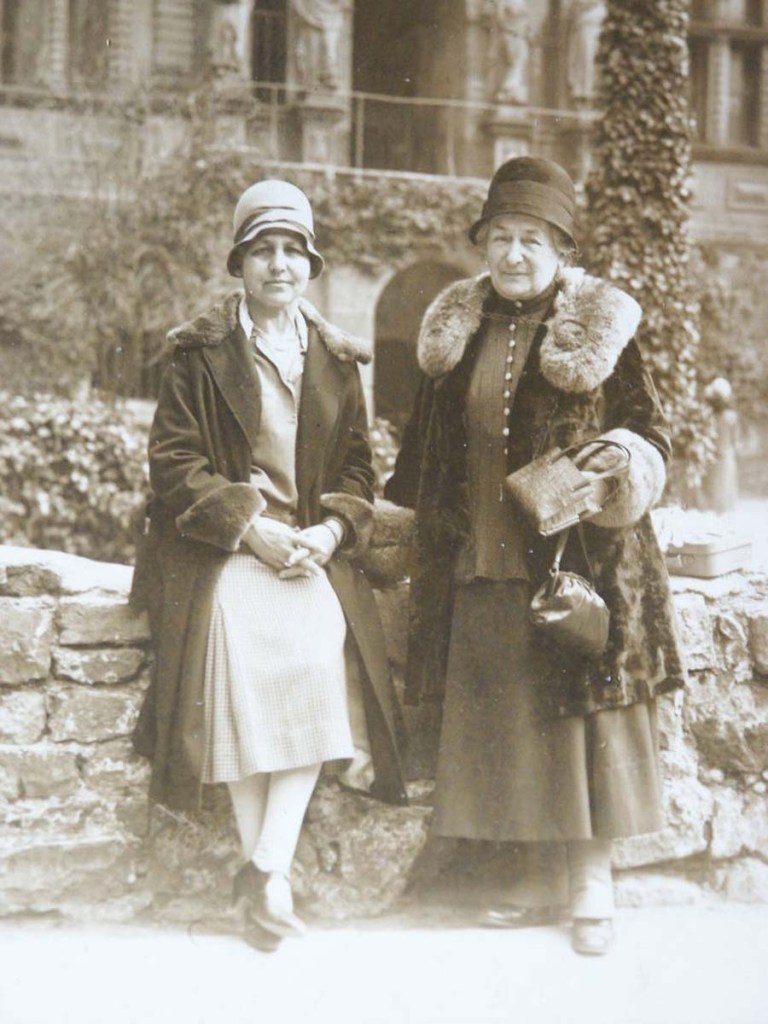
In 1908, she moved to Germany with Scäfer where they lived for three decades. Their time in Germany saw the rise of the Nazi party and both Scäfer and Catherine helped many Jewish families to escape.4 Something which was well known and celebrated by her local German community. They both remained in Germany until 1938 when Scäfer died and Catherine moved back to England. Upon her death in 1942, Catherine asked for a part of her ashes to be buried next to Scäfer.
The amount of families they helped, who they were and also Catherine’s involvement in the Suffragist movement is not yet fully known. But it is clear that she had a significant impact within the community.
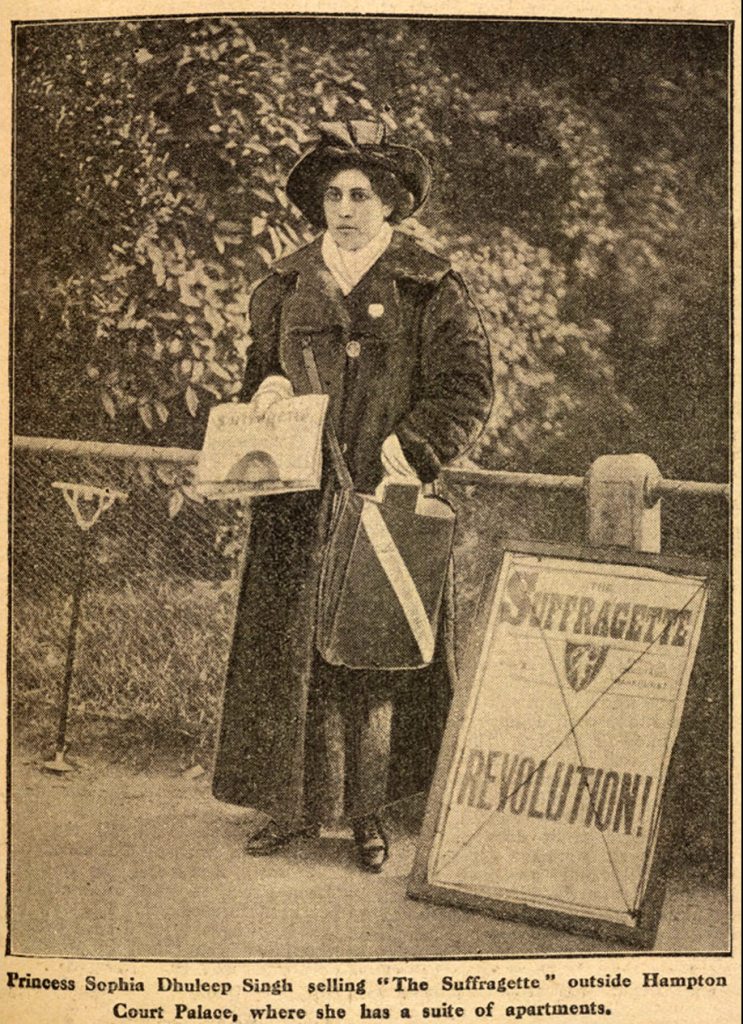
The youngest of the three sisters, born in 1876 and goddaughter to Queen Victoria, Princess Sophia Duleep Singh had a significant role within the Suffragette movement. There is also much more information and details about her life available compared to her sisters.
Throughout her life, she was very passionate about women’s rights and their education. In 1909, she joined the Women’s Social and Political Union and she was also a member of the Women’s Tax Reform League. She attended the march to Parliament Square, known as ‘Black Friday,’ supported the war effort and even fought for the education of Indian and Sikh women.5
Alongside Catherine, she supported evacuees from the Second World War. However, it is unclear whether these were Jewish evacuees. The context of their evacuation does not seem to be known. Sophia died in 1948 and requested for her ashes to be scattered in Lahore.6
Bamba was the only sister to marry and none of Duleep Singh’s children had children of their own. The sisters are remembered by the astounding things they did in their life-time and I hope that more can be uncovered about their lives and legacy. Their stories are important for both British and Indian history and it is a shame not many people know about who they were and their contributions to society.
Note: You may notice that the word ‘suffragist’ and suffragette’ has been used within this article. UK Parliament describes them as, ‘two groups were the ‘suffragists’ who campaigned using peaceful methods such as lobbying, and the ‘suffragettes’ who were determined to win the right to vote for women by any means.’7 In the context of this article, Catherine has been referred to as a ‘suffragist’ as she was not involved in Emmeline Pankhurst’s ‘Suffragette’ movement, where as Sophia was.
References:
- https://www.hrp.org.uk/tower-of-london/history-and-stories/duleep-singh/#gs.cu7j62 ↩︎
- https://kbssidhu.substack.com/p/princess-bamba-duleep-singh-the-enigmatic ↩︎
- https://museumcrush.org/the-extraordinary-story-of-lgbtq-pioneer-princess-catherine-duleep-singh/ ↩︎
- https://www.hmd.org.uk/resource/catherine-duleep-singh/ ↩︎
- https://www.hrp.org.uk/hampton-court-palace/history-and-stories/sophia-duleep-singh/#gs.cxmfqb ↩︎
- https://www.english-heritage.org.uk/visit/blue-plaques/sophia-duleep-singh/ ↩︎
- https://www.parliament.uk/about/living-heritage/transformingsociety/electionsvoting/womenvote/#:~:text=These%20two%20groups%20were%20the,acts%20which%20attracted%20much%20publicity. ↩︎
 Hidden History by Eesha
Leave a comment